Culture · One word 한 마디
Five words for the Korean table
You do not need to speak Korean to eat Korean. But a few words change how the table feels.
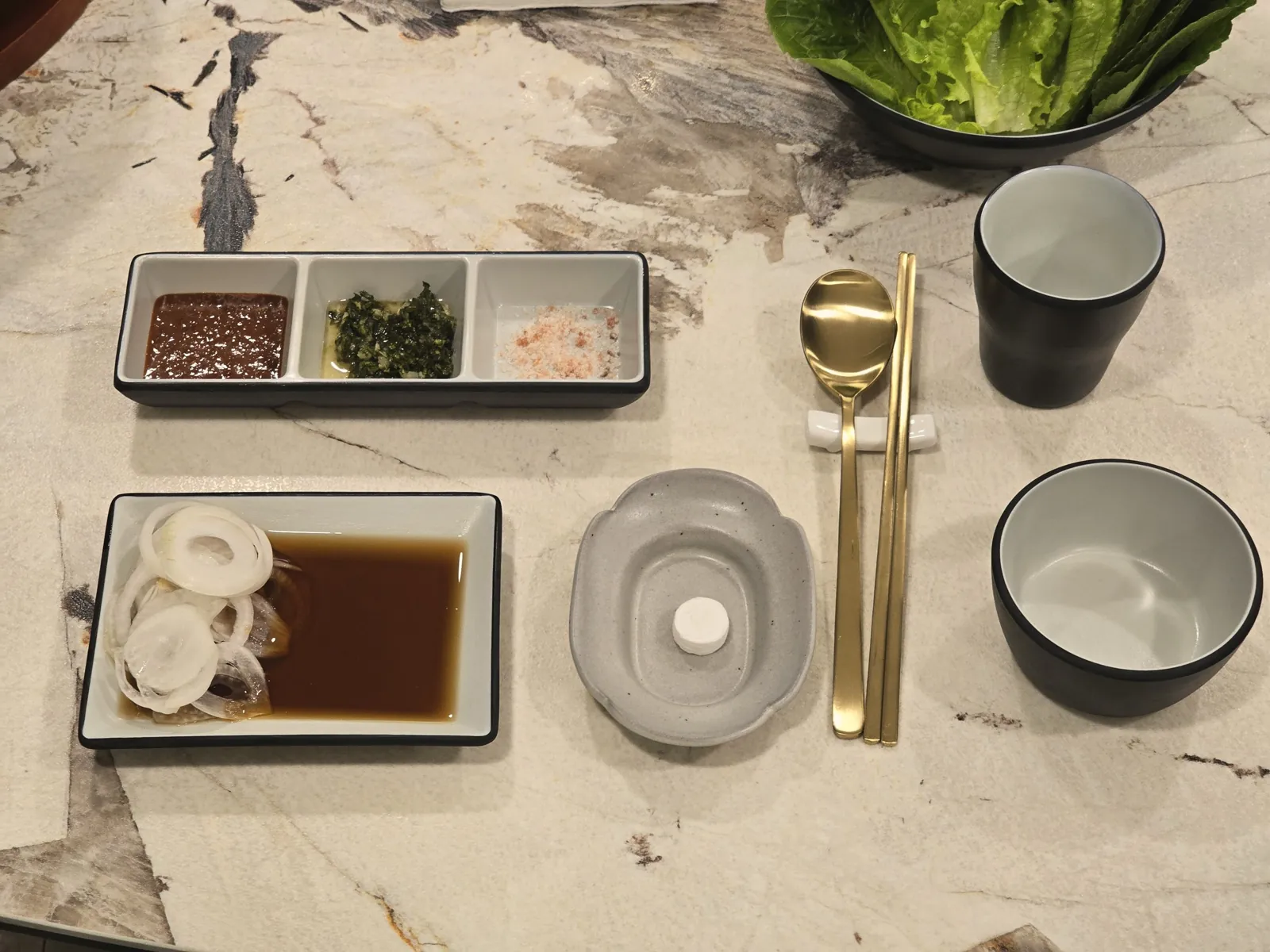
In Korea, even hello can be about food. Friends often greet each other with bap meogeosseo? 밥 먹었어?, “have you eaten?” It is less a question about lunch than a way of saying I hope you are well. A meal is where care shows up first, so the language around it is full of small courtesies. Here are five to try.
- Jal meokgesseumnida 잘 먹겠습니다“I will eat well.” Said before the first bite, to whoever cooked, ordered, or is paying. It is thanks in advance.
- Masisseoyo 맛있어요“It’s delicious.” The easiest compliment at any Korean table, and the one people most like to hear.
- Geonbae 건배“Cheers.” Raise your glass together. With elders, many people turn slightly away when they drink, a small sign of respect.
- Han jan deo 한 잔 더“One more glass.” Usually how one table turns into a longer night.
- Jal meogeosseumnida 잘 먹었습니다“I ate well.” Said when the meal is over. It closes the meal the same way the first word opened it: with thanks.
Questions readers ask
What do Koreans say before eating?
Jal meokgesseumnida (잘 먹겠습니다), “I will eat well.” It thanks whoever cooked, ordered or is paying.
How do you say “delicious” in Korean?
Masisseoyo (맛있어요). It is the easiest compliment at any Korean table.
How do you say “cheers” in Korean?
Geonbae (건배).
Why do Koreans ask “have you eaten?”
It is a common greeting that shows care, much like asking “how are you?”